
We make your CRM consistent and GTM-ready.
Our data standardization services organize your data into a single, agreed-upon format, so every team works with data they can trust.
Data standardization is the process of converting data into a consistent, uniform format so every record follows the same rules. It takes the same value across different formats and standardizes it into a single agreed-upon version, allowing you to segment, route, score, and report on your data without errors.
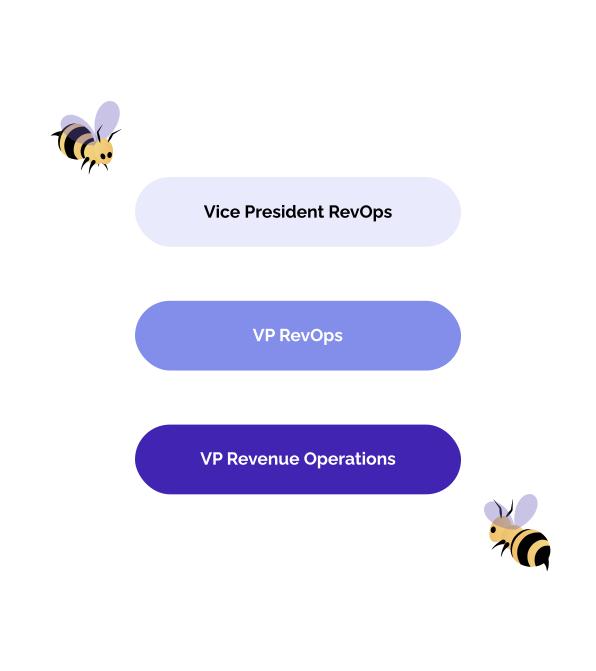
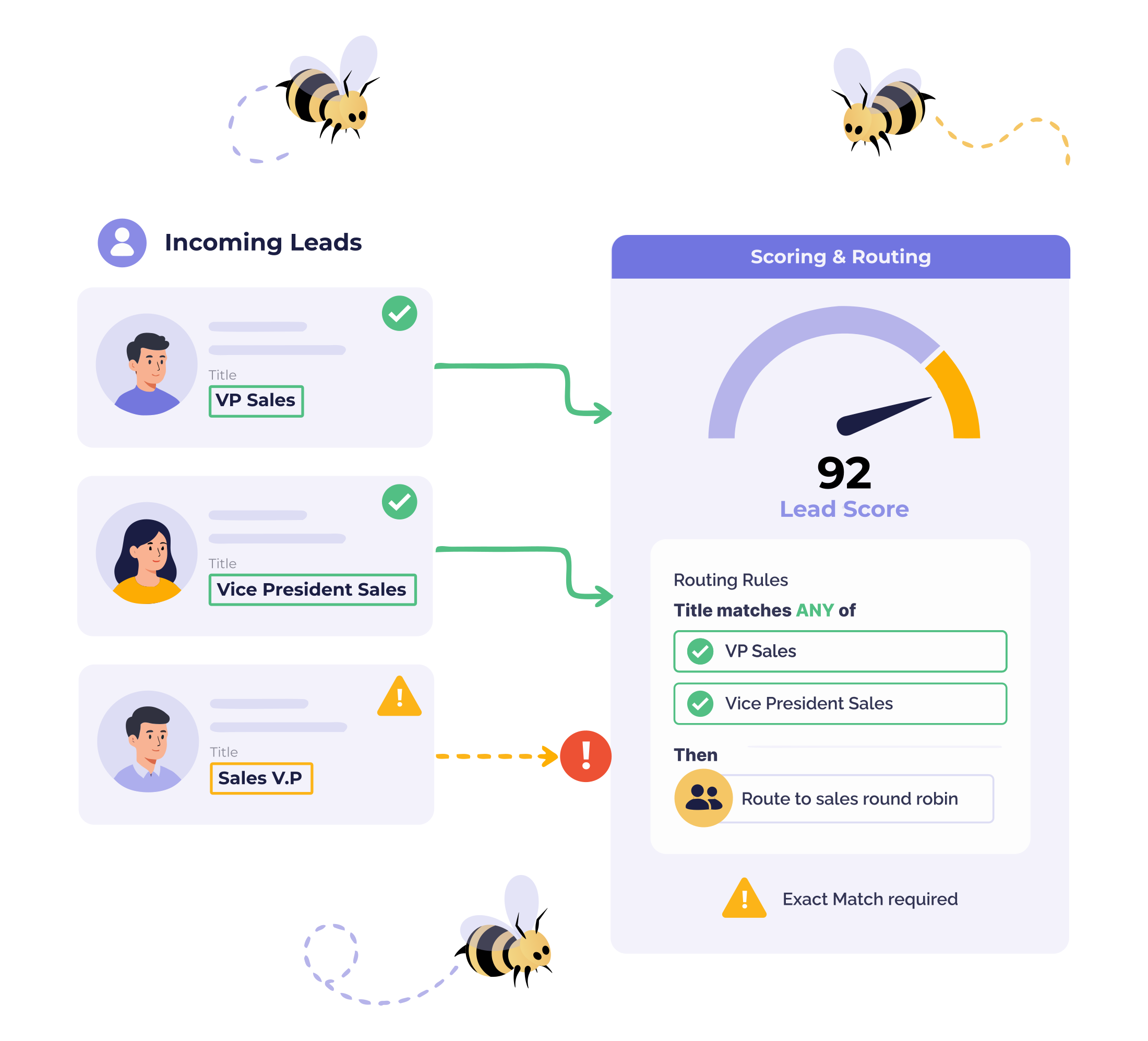
You feel the importance of data standardization the moment you try to run a GTM motion on inconsistent data.
We standardize and normalize job titles, industries, regions, revenue ranges, and headcount bands into a uniform format that your whole team recognizes.
We work with your Sales Ops team to build standardized drop-downs and categories that align to your ICP and GTM motions, following clear standardization guidelines.
We normalize parent-child account relationships and standardize naming conventions across subsidiaries, locations, and business units.
We create rules that standardize incoming data as it enters your CRM, so you can prevent future inconsistencies rather than clean them up later.
We convert legacy field values into your new standardized format, so historical data stays accurate, and your reporting holds up.
Our QA team manually verifies and sense-checks real accounts and contacts to ensure they comply with the standardized, normalized rules we’ve created.
Whatever data types live in your CRM, we map them to your taxonomy (SIC, NAICS, or custom) so every record follows the same format.

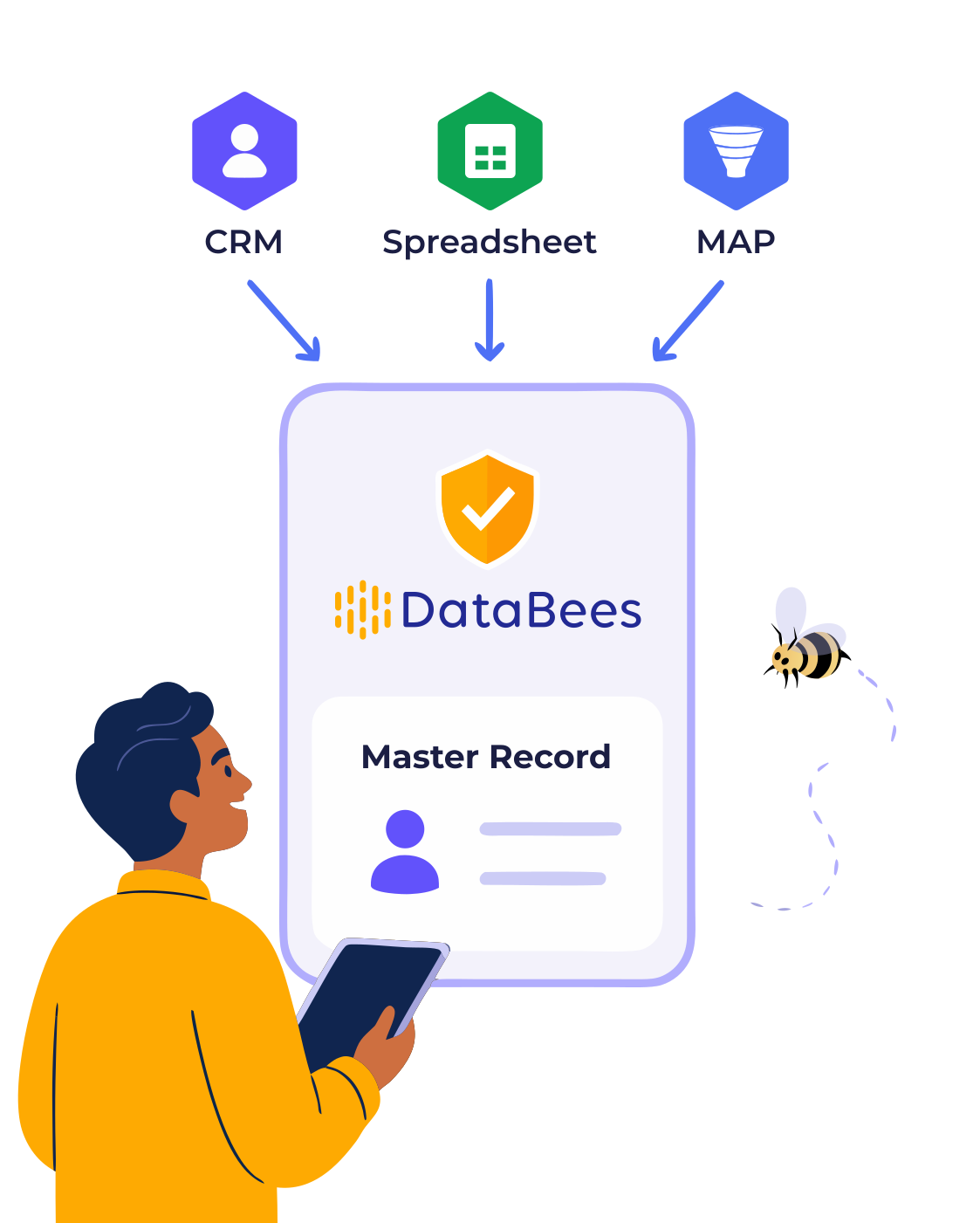
Our service acts like master data management as a service. On a schedule that fits your needs, you get data governance and records that stay consistent across different systems, without the cost of a full MDM platform.
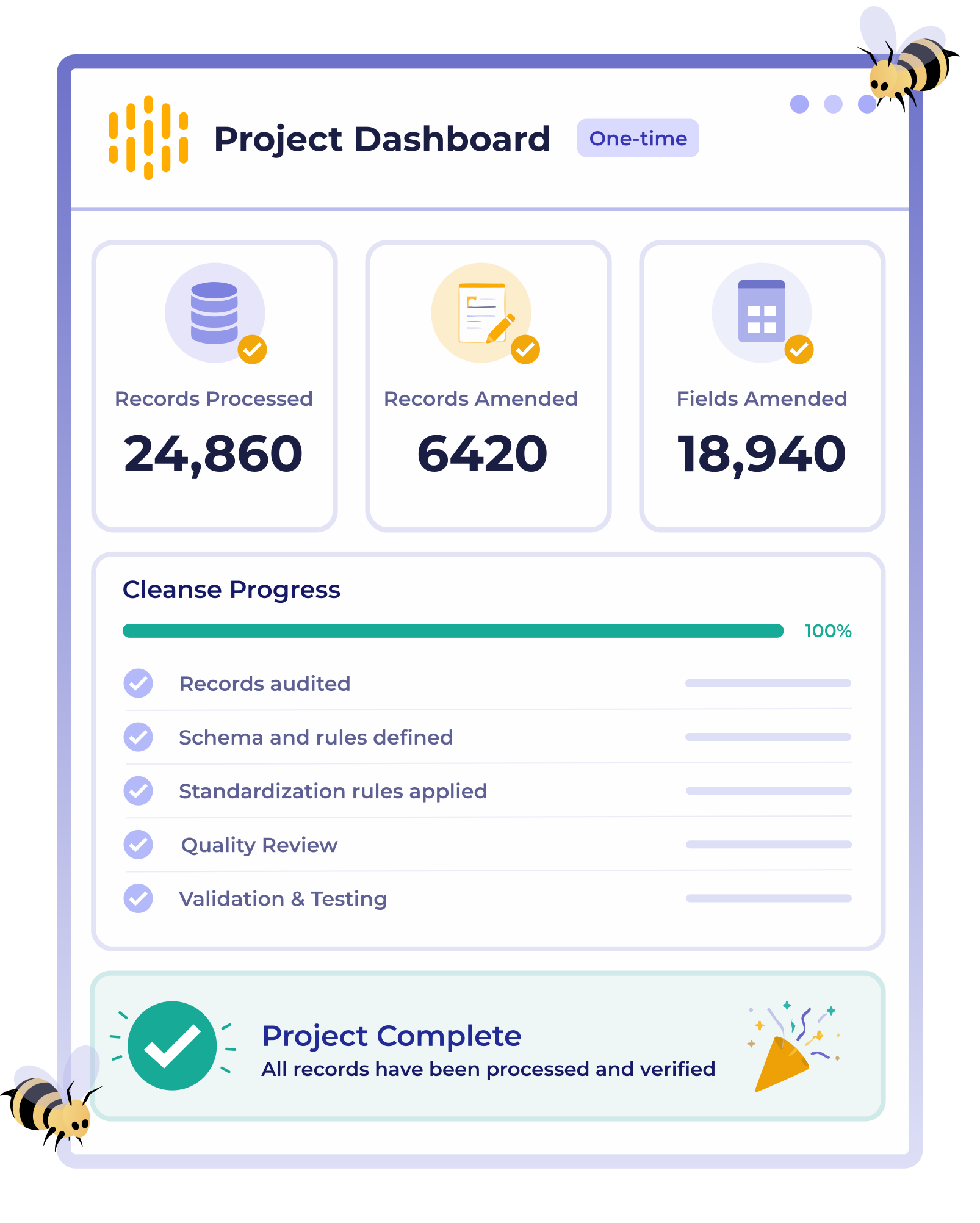
This runs as a scoped project, not another tool to manage. We do the in-house work to standardize data from multiple sources, then hand you back a CRM-ready dataset your whole team can trust.
We customize every project to your requirements, but here’s how the data standardization process usually works.
We audit your CRM to uncover inconsistencies in your required fields. That lets us scope the project accurately.
We define naming conventions, picklists, and normalization rules tailored to your GTM motion.
We standardize existing data and cleanse legacy values to align with your new rules and data standards.
We run data quality assurance and verify that reports, routing, and automations all work as expected.
We establish periodic reviews and checks to maintain data hygiene and reevaluate standardization rules.
We integrate directly with your processes, automations and tech stack.





Data standardization is about ensuring format consistency across record fields in the CRM. Essentially, you’re ensuring that a field that could be recorded in different ways is automatically transformed into a single agreed-upon format. e.g. “VP of Sales”, “Vice-President of Sales”, or “vp sales” are standardized to always be labelled as “VP Sales”.
Data Normalization is about converting unstructured or irregular data sources into a normalized field or picklist that lets you group accounts or contacts. For example: currency or unit exchanges or size brackets (1-10, 11-100, 101-1000 etc).
We standardize any field in your Contact, Account, or Lead records, including job titles, seniority, department, industry, employee count, revenue, location, and picklist values such as country or region. Thanks to our data team, we can perform manual data entry, which allows us to adapt to industry-specific fields. We map inconsistent data to your chosen taxonomy (SIC, NAICS, or custom), verify emails and domains, and deduplicate records so your segmentation actually holds up.
No, they’re related but different. Data cleansing fixes what’s wrong in your data (duplicates, errors, missing values, invalid records). Data standardization transforms what’s there into a consistent and common format. The easy way to remember it: cleansing fixes accuracy, standardization fixes consistency, and they usually run together as part of broader data quality work.
Clean, consistent fields mean segmentation, routing, scoring, and reporting all run on data you can trust. Reps stop second-guessing the CRM, marketing targets the right people, and ops stops fixing the same mess by hand. In short, standardized data is what lets the rest of your GTM stack do its job.
Master data management (MDM) is the practice of maintaining one trusted version of your core data across all systems. Strong data standardization is the foundation of any MDM effort and any serious data management strategy, because you can’t have a single source of truth until your data adheres to a single agreed-upon format. Good data management here is what makes data analysis and reporting reliable. We help teams implement lightweight MDM through clear standards and data governance policies.
Both. We run one-off projects when you need a specific cleanup, such as a CRM migration or list verification before a campaign. We run ongoing standardization, so new records stay in shape as they come in. Most teams start with a one-off to fix what’s already there, then move to an ongoing engagement to stop the mess creeping back.
The process of data standardization takes data from various sources and applies set rules to convert it into a uniform format. We map each value to an agreed standard, cleanse data that doesn’t fit, and verify that the dataset is consistently formatted across the organization. The result is improved data quality and a structure ready for processing and analysis.
Data quality management is the ongoing work of keeping your data accurate, consistent, and usable. To standardize data well is a core part of it. By ensuring data consistency and uniformity across your dataset, standardization helps your team trust the numbers behind strategic planning, segmentation, and reporting.
It depends on the size and state of your CRM. A small database with straightforward fields might take a few days. A large CRM with hundreds of thousands of records and messier fields can run for several weeks or longer. The two biggest variables are volume and complexity, so scoping always starts with a sample audit before we commit to a timeline.
Book a call with our team to discuss your data normalization & standardization service needs.